

Address
71 Woodlands Industrial Park E9
#02-04 Singapore (757048)
#02-04 Singapore (757048)
Mon–Fri
9:00am–6:00pm
9:00am–6:00pm
Sat & Sun by appointment
 HDB | Bomb Shelter Storeroom Racks


Built with high-tensile steel beams, our heavy-duty long-span racks are engineered to support higher load capacities with ease. These racks are ideal for industrial and warehouse storage environments where durability, stability, and strength are essential. Whether you’re storing bulky equipment or fast-moving inventory, our racking systems are designed to meet your changing storage demands.
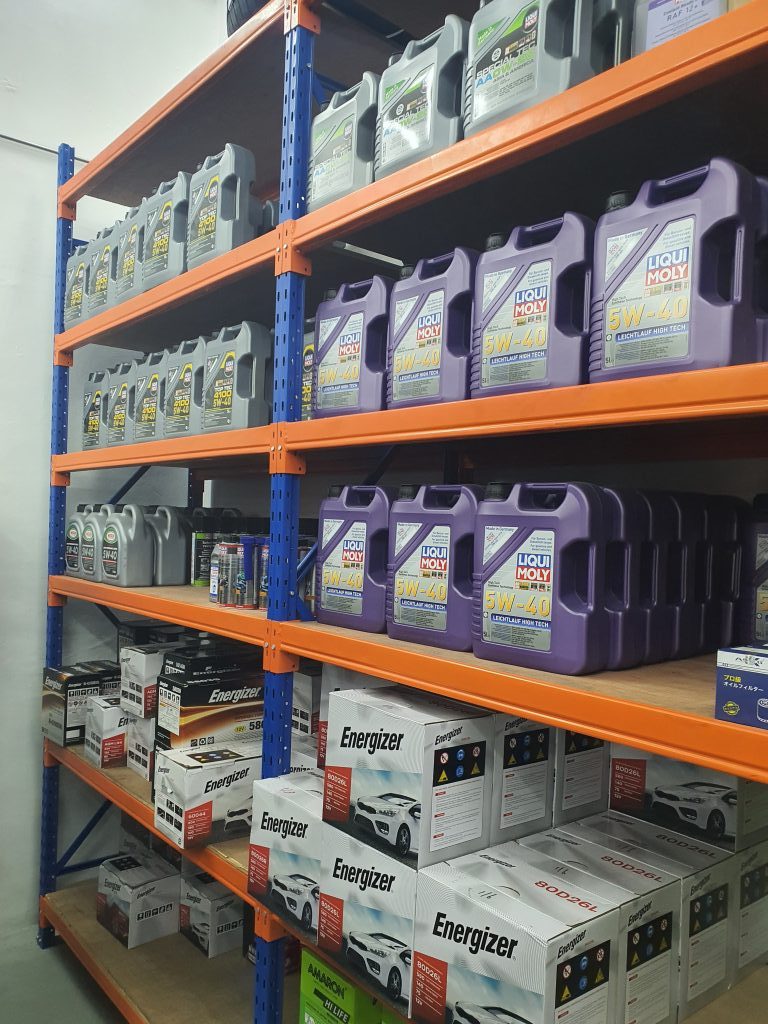
Best known for their low cost, these boltless racking systems are perfect for storerooms and offices. Each one is made from sturdy materials that are capable of holding a good amount of load. This is more cost efficient compared to regular carpentry works or office filing cabinets as you are able to relocate them if needed. Our storeroom racks come in different heights, depths, and lengths and we also allow for customisation. Below are the most common sizes of the racks we manufacture.
Looking for something more aesthetically pleasing? We have our Rivet Rack Series. Unlike our boltless racks, this design casts away the industrial feel while retaining its desired utility. By removing the visible holes in the vertical posts, it makes cleaning a breeze as less dust gets trapped in those crevices. This makes it a great option for areas such as study rooms, kitchens, as well as open office spaces.
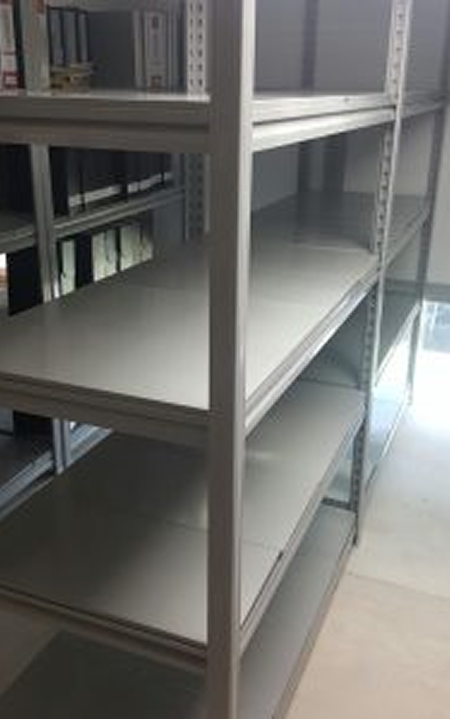
The standard rectangle storeroom rack is commonly used in warehouses and retail shops. These are usually placed in parallel rows or along the wall perimeter. It comes as a 4-tier or 5-tier shelving in general. However, these can be customised according to your requirements.
This is a practical solution for HDBs and BTOs that come with a door. The L-Shaped rack resembles two rectangular racks placed together and it is also ideal for small-scale commercial spaces.
This is essentially the combination of three rectangle racks. It resembles the letter ‘U’ and fits perfectly in rooms which has an opening or door that is placed in the middle of a wall.
Yes, our racks come in multiple sizes and can be customised to fit any bombshelter layout.
Absolutely. Our racks are built to hold up to 400 kg per shelf level, making them ideal for both light and heavy storage.
Most boltless racks can be assembled in under an hour without any special tools.
Yes, we deliver and install islandwide.
Yes, all our racks come with an epoxy powder coating, which makes them rust-resistant. It is ideal as a long-term storage solution.
Start by measuring the internal dimensions of your bombshelter from floor level. Note the full length, width, and ceiling height. Take note of any utility panels, power points, telephone sockets, or ventilation components on the walls.
For most HDB bomb shelters, a boltless rack with a height of 1,800-2,100 mm, a depth of 450 mm, and a length of 900-1,200 mm offers the best fit within the available space.
Yes. Adjustability is one of the key advantages of a boltless racking system. Each shelf slots directly into the vertical posts without bolts or tools, meaning you can raise, lower, or reposition shelf levels at any time as your storage needs change.
No. Our boltless bombshelter racks are entirely freestanding and require no drilling, bolting, or wall mounting. This is also an HDB regulatory requirement: the walls, floor slab, ceiling slab, and door frame of a household shelter must not be hacked, drilled, or otherwise structurally altered.
Yes, with careful measurement and planning. HDB bomb shelters typically contain electrical sockets, telephone points, ventilation components, and sometimes pipe runs along the walls. Before selecting a rack, map out the position and size of these elements when taking your measurements.
Choose a rack height that uses as much of your available ceiling clearance as possible, typically 1,800-2,100 mm for a standard HDB bomb shelter. A 5-tier configuration keeps more items off the floor and organises your belongings into clearly defined, accessible levels.
Absolutely. Our boltless rack SG range is specifically designed with compact HDB spaces in mind, and the narrow rectangular bombshelter is one of the most common configurations they are used in.
Factors to consider


